Cloud Cost Optimization: Reduce Cloud Costs Without Losing Performance
Learn how cloud cost optimization helps businesses reduce unnecessary cloud expenses, improve efficiency, and maintain performance with smarter resource management.
Zintech Cloud Solutions Team
4/13/20262 min read
Why Do Businesses Need Cloud Cost Optimization?
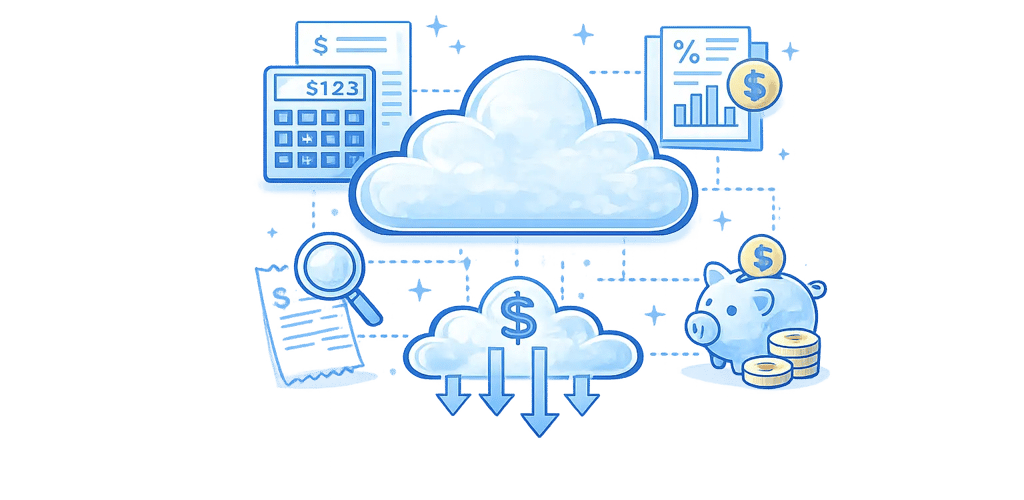
Cloud services give businesses flexibility and scalability, but without proper control, costs can increase quickly.
In real-world scenarios, many businesses move to the cloud expecting lower costs, but over time they notice their monthly bills increasing. This usually happens because cloud resources are not actively monitored or optimized.
For example, a business managing customer data such as user activity, transactions, and application workloads may allocate extra resources to handle peak demand. However, if these resources are not adjusted afterward, the business continues paying for unused capacity.
The issue is not the cloud itself — it is inefficient resource usage.
Cloud cost optimization ensures that businesses only pay for what they actually use, while maintaining system performance and reliability.
What Is Cloud Cost Optimization?
Cloud cost optimization is the process of monitoring, analyzing, and adjusting cloud resource usage to reduce unnecessary expenses without affecting performance.
It focuses on:
Identifying unused or underutilized resources
Adjusting resource allocation based on real usage
Eliminating unnecessary spending
Improving efficiency of cloud infrastructure
The goal is not just to reduce costs, but to use cloud resources more effectively.
How Cloud Cost Optimization Works in Practice
Cloud environments are dynamic, meaning resource usage changes over time. Without continuous monitoring, businesses may end up paying for resources they no longer need.
In practical implementations, optimization involves analyzing how systems are being used and making adjustments accordingly.
For example, consider a business storing customer data and running applications in the cloud:
Some servers may remain active even when not in use
Storage may increase without proper cleanup
Applications may use more resources than necessary
Cloud cost optimization addresses these issues by:
Adjusting resources based on real-time demand
Shutting down unused or idle systems
Optimizing storage usage and removing unnecessary data
Selecting the right pricing models based on usage patterns
This ensures that costs remain controlled while systems continue to perform efficiently.
However, without proper planning, aggressive cost-cutting can impact performance or system stability. This is why optimization must be balanced with business requirements.
To maintain both cost efficiency and performance, businesses rely on cloud management and migration solutions for continuous monitoring and strategic optimization.
Key Benefits of Cloud Cost Optimization
Cloud cost optimization improves both financial and operational efficiency.
It reduces unnecessary expenses by ensuring that businesses only pay for the resources they actually use.
It improves resource efficiency by aligning infrastructure with real usage patterns.
It supports scalability by allowing businesses to increase or decrease resources based on demand without overspending.
It enhances visibility into cloud spending, helping businesses understand where costs are coming from and how to control them.
It improves decision-making by providing insights into usage trends and cost patterns.
It ensures performance is maintained while optimizing costs, avoiding the risk of under-provisioning.
What Should Businesses Consider Before Optimizing Cloud Costs?
Effective cost optimization requires a structured approach.
Businesses should consider:
Their current cloud usage and workload patterns
The balance between cost reduction and performance
Data storage requirements and growth rate
Application performance needs
Long-term business goals
Optimization should not focus only on reducing costs, but on improving overall efficiency.
Final Thought
Cloud cost optimization is essential for businesses that want to scale efficiently without overspending.
While cloud platforms provide flexibility, controlling costs requires continuous monitoring, analysis, and adjustment.
Businesses that approach cost optimization strategically can reduce expenses, improve efficiency, and maintain strong system performance.

Contact Us
Ready to boost your cloud journey? Reach out!
Contact
Reach out to zintech for cloud and AI help
business@zintech.in
© 2025. All rights reserved.
Our Services
AWS Migration – Zero Downtime: Achieve 99.9% reliability and 30% TCO recovery with SRE-led transitions.
Managed Cloud Ecosystem:
24/7 full-lifecycle governance and security for global enterprise workloads.Cloud Strategy & Consulting: Strategic infrastructure modernization and AI-ready cloud transformation.
Global Operations
Headquarters: Wardha, India.
Markets Served:
United States | United Kingdom | United Arab Emirates.Technical Excellence: Specialized in AWS Cloud Architecture, Production-Level AI Solutions, and Search Intelligence.